
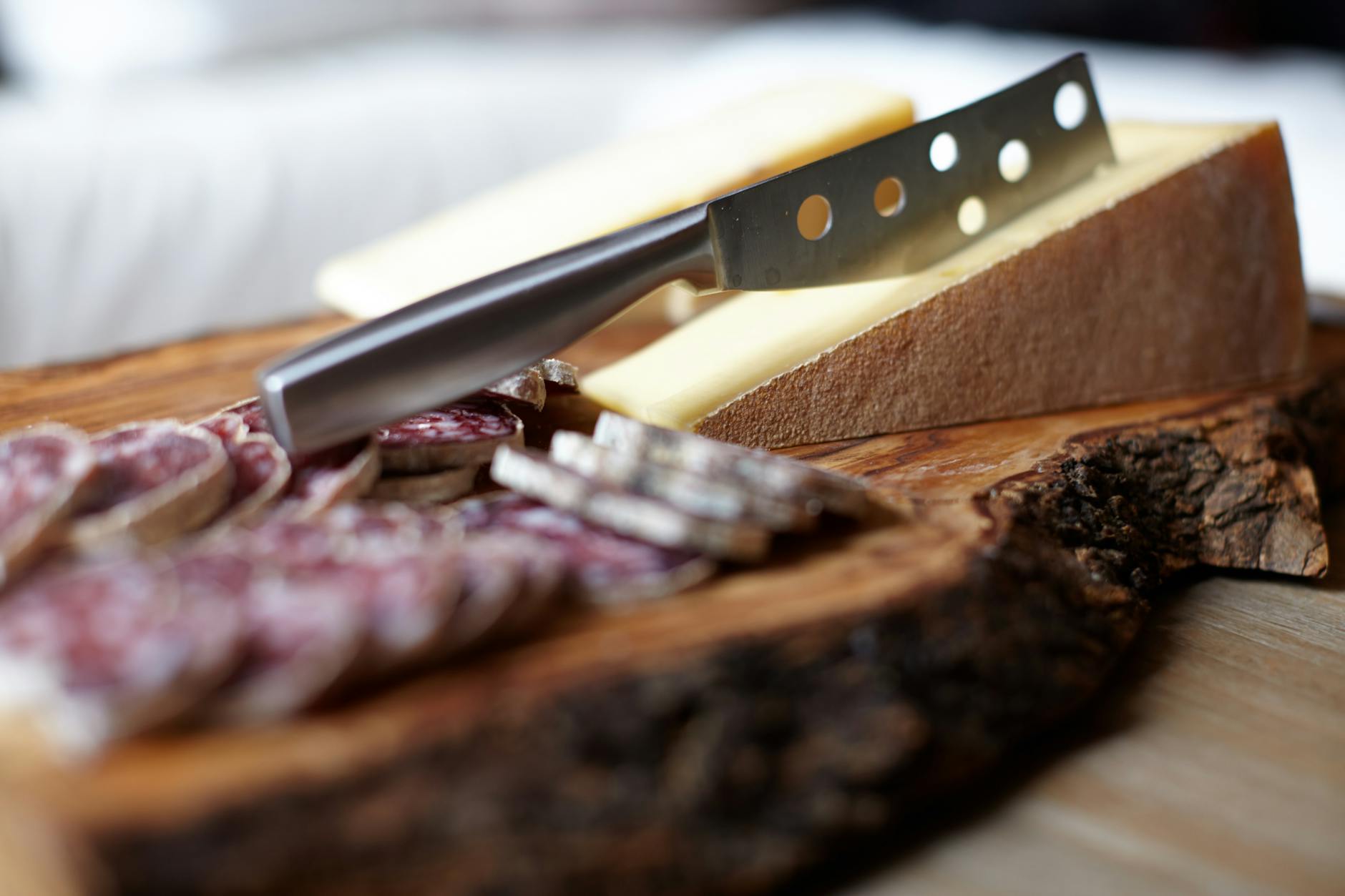
Italy is famous for its meat and cheeses and one of my favourite places to go when I am in Italy is our local salumeria. It is called Salumeria San Prospero and is situated in the corner of a bustling piazza where you benefit from the shade of the trees in the summer months. There they offer various plates of meats and cheeses all of which are amazing making the choice difficult. Whilst it may seem like a light meal it certainly isn’t and by the end of the plate you are easily satisfied. There are also other options like paninis if a full plate of meat and cheese is not for you. The Italians do like to know what they are eating so we will go through a few of the most popular meats and cheeses to help you.
The Cheeses
Burrata – This cheese is very similar to Mozzarella for those who are familiar with that, the main difference is that it is filled with cream from the whey. It is perfect with salads but for the salumeria is pairs very well with salty cured hams.
Gorgonzola PDO – To keep this simple gorgonzola is a blue cheese similar to the English Stilton, French Roquefort, Spanish Cabrales and the Danish Blue. The main thing about gorgonzola is that it is only ever made from cow’s milk. So if you are a blue cheese fan give it a go as it falls between the stronger French Roquefort and the milder Danish Blue. In case you are wondering DOP stands for Denominazione di Origine Protetta and means that it is a protected designation of origin. In layman’s terms this ensures that the product is grown and packaged locally and also guarantees that it was made by local farmers and artisans using traditional methods.
Grana Padano PDO – This is a hard cheese with a similar texture to Parmigiano-Reggiano but is less mature giving it a slightly sweeter and milkier flavour and taste. This is a great cheese to eat along with ham and the hardness gives time for the mouth to play with the flavours of both the cheese and the meat.
Mozzarella di Bufala PDO – This is one we all know from the toppings of the pizzas and it is made all over the world but the best mozzarella comes from the buffalos of Campania. Authentic Mozzarella di Bufala can only be made in seven provinces in Italy. This is a great cheese to pair with meat and a particular favourite of mine is to have this with bresaola. It is a soft cheese which has the apperance of a smooth ball when produced but as you tear it open or eat into it you will enjoy the layers that make up its composition. The taste is sweet and mild and as a bonus it is highly nutritious.
Pecorino – Pecorino has many varieties but it is a hard cheese with a crumbly texture and is made from sheep’s milk. The different varieties will obviously mean that each one is different but as an accompaniment to a selection of meats is worth a try especially if you are looking to add a harder cheese.
Parmigiano-Reggiano PDO – For some Italians this is the ‘king’ of cheeses to such an extent that people invest in new Parmigiano-Reggiano whilst it matures. Again we have another hard cheese and is similar to Grana Padano but there are some unique differences and locals pay particular attention to these difference. Parmigiano-Reggiano is matured for longer than its counterpart which gives it a more balanced, creamier and milkier flavour. My wife insists that the cheese needs to mature for 36 months before it is ready to be eaten. The strong crumbly taste in the mouth makes it perfect for either eating on its own or with meat. Some may think that it comes from Parma but those from Reggio-Emilia will tell you that it is not and comes from Reggio-Emilia where many of the local shops will be selling it.
Taleggio PDO – Last is a semi-soft cow’s cheese which has rind around it which can also be eaten. The cheese is similar to Edam and Gruyere if you are familiar with them. The rind gives it a very strong aroma but the cheese inside whilst rich will be mellow and will include fruit and buttery flavours as you eat it.
If I was making just a cheese board, as I often do, I would normally use four cheeses. From these Italian cheeses I would choose gorgonzola, pecorino, Parmigiano-Reggiano and taleggio.
And now for the meat.
Salami – Most people will be familiar with this as a topping on a pizza. In Italy it is still used as a pizza topping but when eaten on its own there are many different types of salami. Typically the Italians will have their own preference about what salami is best and which they prefer to eat. Most are made from pork but can also be made from wild boar, deer and even horse meat. The best thing is to simply try some and see if you like it. My preference is to take the outside membrane off before eating it. A personal favourite of mine is strolghino which is a thin salami made from lean leg meat and originates from the area around Parma.
Prosciutto – There are two types of prosciutto, crudo and cotto, let’s keep this simple. Crudo is raw and cotto is cooked although this means that there will be some difference in the texture and taste. If you are not against having the raw type then again it is best to try both and see which you prefer. Prosciutto Crudo di Parma is very famous in the northern towns and cities and you will often see legs of pork hanging up in the windows of the delicatessant shops.
Mortadella – This one originates from Bologna and again is made from pork but has pieces of lard running through it. This is a lighter meat and I often prefer this earlier in the day and is very nice at breakfast time.
Bresaola – Another favourite of mine along with strolghino. Bresaola is typically made from beef rather than pork and is a lean meat with very little fat. It is salted, spiced and air dried in the production process, the different spices used by the producers will change the flavour.
Speck – This is a type of prosciutto but the flavour is quite different. It is a cut from the pigs hind leg and then the cut is salt-cured and seasoned with various spices before it hangs for several months before being ready to eat. This results in a slightly smoky meat with the spices enhancing its flavour.
Coppa – This is made from pork and each region will have its own way of flavouring it during the curing process from a spicier taste in the southern region of Calabria to vibrant spices in the northern areas.
Pancetta – The last one to give you a brief overview is pancetta and this one is pork belly. Whilst it is often seen as the Italian version of bacon it is often eaten as a ‘cold-cut’. The higher fat content of pancetta only adds to the flavour if you don’t mind the fat, there will also be a slightly salty taste to it and not to mention an abundance of pork flavour.
If I had to choose three for a meat board at a salumeria then it would be proscuitto, strolghino and bresaola.
Here ends the very quick overview of cheese and meats that we hope will give you an idea of what you are ordering when in Italy. We hope that you will go and enjoy a board of meat and cheese at a salumeria when you are in Italy. Like we have said the best thing to do is to sample some and remember what you like, in particular the brand.